
Essential details
Shipping:Express delivery
Product Introduction
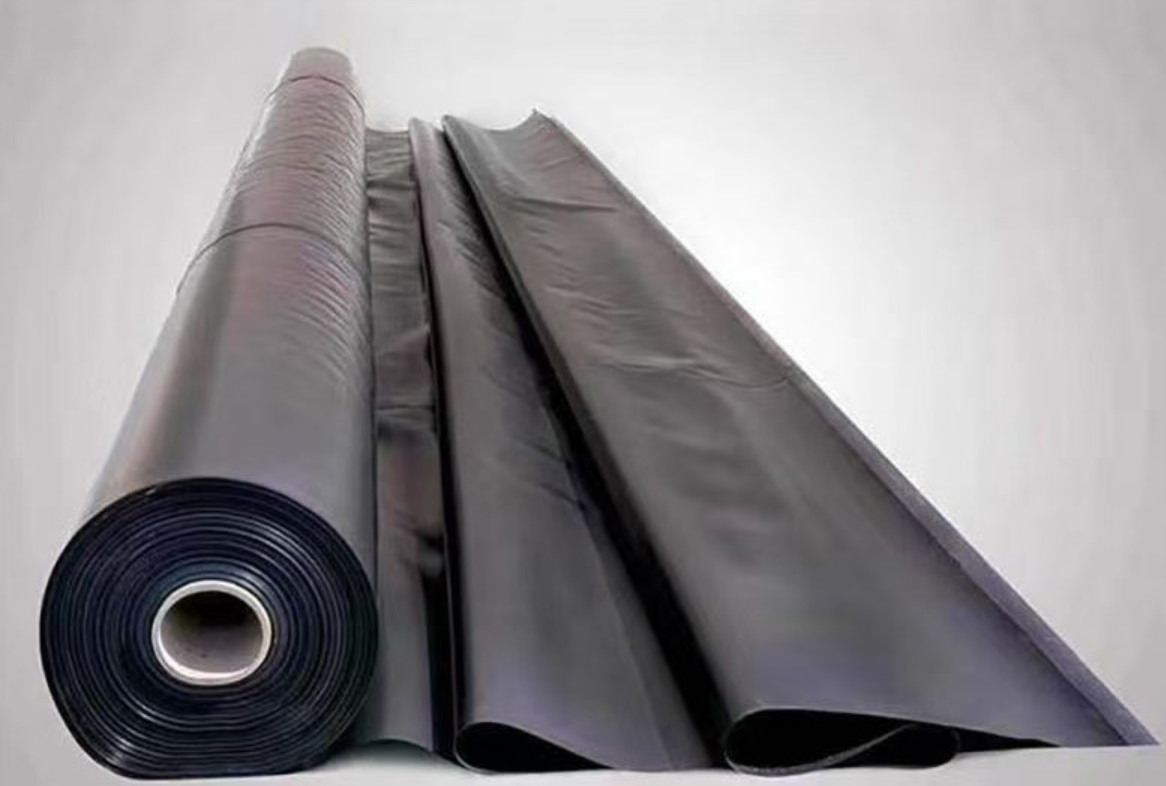
The HDPE geomembranes are manufactured using virgin polyethylene resin. Their primary composition consists of 97.5% high-density polyethylene (HDPE), supplemented by approximately 2.5% of additives—including carbon black, anti-aging agents, antioxidants, UV absorbers, and stabilizers. These geomembranes are produced using fully automated manufacturing equipment via a three-layer co-extrusion process. All products are manufactured in strict compliance with industry standards and are available in a comprehensive range of specifications. Both smooth and textured impermeable membranes are available in thicknesses ranging from 0.25 mm to 3.0 mm, with widths spanning 4 meters to 12 meters, thereby meeting the diverse application requirements of environmental protection and sanitation, water conservancy, construction, municipal engineering, landscaping, petrochemicals, mining, salt production, agriculture, and aquaculture.
**Applications of HDPE Geomembranes**
1. **Environmental Protection & Sanitation:** (e.g., municipal solid waste landfills, sewage treatment plants, toxic and hazardous waste disposal sites, hazardous material storage facilities, industrial waste sites, construction and demolition debris sites, etc.)
2. **Water Conservancy:** (e.g., seepage control, leak plugging, and structural reinforcement for river, lake, reservoir, and dam embankments; canal lining; vertical cutoff walls; slope protection; etc.)
3. **Municipal Engineering:** (e.g., subway systems, underground structures of buildings, rooftop water storage tanks, rooftop gardens—including seepage control; sewage pipeline lining; etc.)
4. **Landscaping:** (e.g., lining for artificial lakes, ponds, and golf course water features; slope protection; etc.)
5. **Petrochemicals:** (e.g., seepage control for storage tanks at chemical plants, refineries, and gas stations; lining for chemical reaction tanks and sedimentation basins; secondary containment liners; etc.)
6. **Mining:** (e.g., bottom lining and seepage control for ore washing tanks, heap leaching ponds, ash disposal sites, dissolution tanks, sedimentation basins, storage yards, and tailings ponds; etc.)
7. **Agriculture:** (e.g., seepage control for reservoirs, drinking water cisterns, water storage ponds, and irrigation systems.)
8. **Aquaculture:** (e.g., lining for fish ponds and shrimp ponds; slope protection for sea cucumber enclosures; etc.)
Installation of HDPE Geomembranes
1. Prior to the installation of HDPE geomembranes, corresponding qualified acceptance certificates for the civil engineering works must be obtained.
2. Before cutting the HDPE membrane, relevant dimensions should be measured precisely; cutting should then be performed based on these actual measurements rather than solely relying on dimensions indicated in the design drawings. Each membrane sheet should be assigned a unique number, and detailed records should be maintained in a dedicated log sheet.
3. During the installation of HDPE geomembranes, efforts should be made to minimize the number of seams. While ensuring quality remains the top priority, material usage should be optimized to minimize waste; this approach also facilitates better quality control.
4. The overlap width between adjacent membrane sheets at the seams should generally be no less than 10 cm. Typically, the seams should be oriented parallel to the slope—that is, aligned in the direction of the gradient.
5. In areas involving corners or irregular terrain, the length of the seams should be minimized as much as possible. Unless specifically required otherwise, seams should be avoided within a zone extending 1.5 meters from the crest of a slope or from any area subject to concentrated stress, particularly on slopes with a gradient steeper than 1:6.
6. During the installation process, care must be taken to prevent the formation of artificial wrinkles or folds in the HDPE geomembrane. When installation is performed in low-temperature conditions, the membrane should be pulled taut and laid as flat as possible.
7. Once the installation of the HDPE geomembrane is complete, foot traffic on the membrane surface and the movement of tools should be minimized. No objects capable of causing damage to the HDPE membrane—whether by being placed upon it or carried across it—should be brought onto the membrane surface, in order to prevent accidental puncture or damage.
1. Prior to the installation of HDPE geomembranes, corresponding qualified acceptance certificates for the civil engineering works must be obtained.
2. Before cutting the HDPE membrane, relevant dimensions should be measured precisely; cutting should then be performed based on these actual measurements rather than solely relying on dimensions indicated in the design drawings. Each membrane sheet should be assigned a unique number, and detailed records should be maintained in a dedicated log sheet.
3. During the installation of HDPE geomembranes, efforts should be made to minimize the number of seams. While ensuring quality remains the top priority, material usage should be optimized to minimize waste; this approach also facilitates better quality control.
4. The overlap width between adjacent membrane sheets at the seams should generally be no less than 10 cm. Typically, the seams should be oriented parallel to the slope—that is, aligned in the direction of the gradient.
5. In areas involving corners or irregular terrain, the length of the seams should be minimized as much as possible. Unless specifically required otherwise, seams should be avoided within a zone extending 1.5 meters from the crest of a slope or from any area subject to concentrated stress, particularly on slopes with a gradient steeper than 1:6.
6. During the installation process, care must be taken to prevent the formation of artificial wrinkles or folds in the HDPE geomembrane. When installation is performed in low-temperature conditions, the membrane should be pulled taut and laid as flat as possible.
7. Once the installation of the HDPE geomembrane is complete, foot traffic on the membrane surface and the movement of tools should be minimized. No objects capable of causing damage to the HDPE membrane—whether by being placed upon it or carried across it—should be brought onto the membrane surface, in order to prevent accidental puncture or damage.