
Essential details
Shipping:Express delivery
Product Introduction
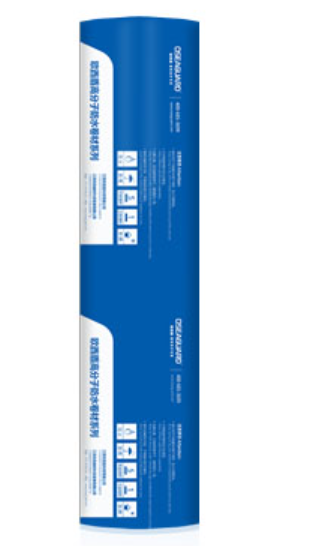
HYQ®-200 thermoplastic polyolefin (TPO) pre-laid waterproof membrane consists of thermoplastic polyolefin (TPO) sheets as the main material, self-adhesive, a surface anti-adhesion (reducing) protective layer (except for overlapping areas), and a release material (if needed). It is bonded to the subsequently poured concrete and is installed using the pre-laid method. Overlapping edges are welded with hot air. No additional layers are required, and a protective layer is also optional. The product meets the requirements of T/CBMF43-2018 "Thermoplastic Polyolefin (TPO) Pre-laid Waterproof Membrane" standard.
Features:
It combines the aging resistance of EPDM rubber with the weldability of polypropylene;
Excellent low-temperature resistance, remaining pliable even at -40℃ without cracking, exhibiting good flexibility; High tensile strength, high tear strength, puncture resistance, and chemical corrosion resistance;
Good heat aging resistance and dimensional stability; Overlap edges are hot-air welded, making them safer and more reliable than self-adhesive overlaps;
Superior weather resistance, with an underground service life comparable to the structure itself.
Excellent low-temperature resistance, remaining pliable even at -40℃ without cracking, exhibiting good flexibility; High tensile strength, high tear strength, puncture resistance, and chemical corrosion resistance;
Good heat aging resistance and dimensional stability; Overlap edges are hot-air welded, making them safer and more reliable than self-adhesive overlaps;
Superior weather resistance, with an underground service life comparable to the structure itself.
It adheres to the structural layer in reverse phase, unaffected by subgrade settlement, forming a seamless structure between the waterproof layer and the concrete structure, preventing water seepage.
Scope of application:
It is mainly used in basement floor slabs, subway tunnels, pipe corridors and other parts.
Construction methods and techniques:
Construction Process: Substrate cleaning → Positioning and marking → Pre-laying of membrane → Overlap treatment → Detail joint treatment → Reinforcing steel binding → Concrete pouring.
Construction Method:
Membrane Pre-laying: Measure and cut the product, with the self-adhesive release paper facing the structural layer and the other side facing the substrate. Pre-lay it on the subbase, retaining wall, diaphragm wall, or pile foundation.
Membrane Joints: Hot air welding is used to weld the membrane joints, forming a completely sealed waterproof system.
Membrane Pre-laying: Measure and cut the product, with the self-adhesive release paper facing the structural layer and the other side facing the substrate. Pre-lay it on the subbase, retaining wall, diaphragm wall, or pile foundation.
Membrane Joints: Hot air welding is used to weld the membrane joints, forming a completely sealed waterproof system.
Storage and Transportation:
During storage and transportation, products of different types and specifications should be stacked separately and not mixed. Avoid exposure to direct sunlight and rain, and ensure good ventilation. The storage temperature should not exceed 45℃. When storing flat, the stacking height should not exceed 5 layers; when storing upright, stack in a single layer. Avoid contact with acids, alkalis, oils, and organic solvents. During transportation, prevent tilting or horizontal pressure; cover with tarpaulins if necessary.